Perimenopause Brain, Real Pleasure, and the Wheel of Consent: A Conversation with Menopause Doula Traci Thrash
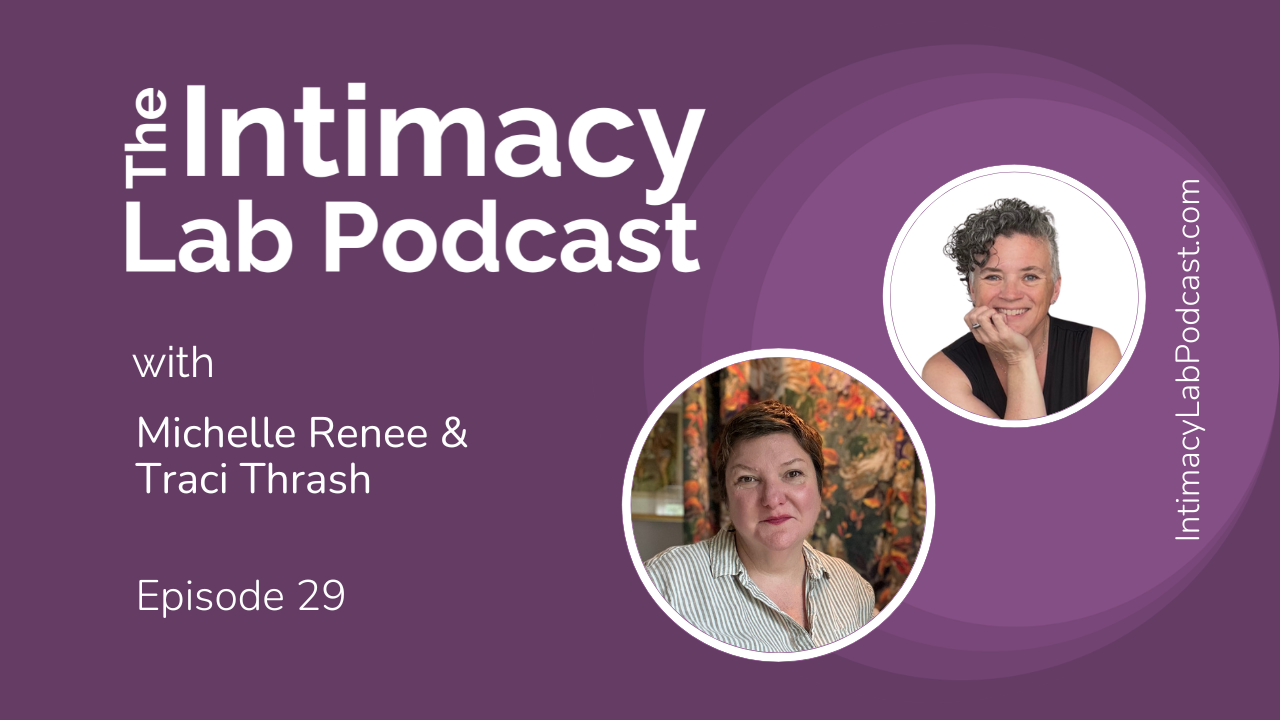
If you've ever stood in a doorway and forgotten why you walked into the room, welcome to perimenopause brain. On this episode of The Intimacy Lab Podcast, I sat down with Traci Thrash, a menopause doula at The Changed Doulas, for one of those conversations that starts with brain fog and ends up touching sexuality, consent, neurodivergence, and what it actually means to be "empowered" in midlife.
This one runs long (almost two hours), because we let it. Here's what we covered, and why it matters whether or not you're anywhere near perimenopause yet.
What Is a Menopause Doula, Anyway?
Traci's title raises eyebrows on its own. A menopause doula does what a birth doula does, but for the menopause transition: education, yes, but mostly connection. Traci works with women one-on-one and increasingly in group settings, because what people are missing most isn't information. It's a place to say "is this normal?" out loud and have someone answer honestly.
That distinction matters. Google can tell you about hot flashes. It can't tell you you're not losing your mind.
Pleasure Doesn't Mean Sex (and Neither Does Desire, Intimacy, or Romance)
A recurring theme in this episode: almost every word we use to talk about connection gets collapsed into "sex" by default. Pleasure. Desire. Intimacy. Even romance.
Traci talks about deliberately avoiding the word "pleasure" in her work because people hear it and assume she's only talking about sex. We dig into why that collapse happens: compulsory sexuality, a culture that's nervous about naming non-sexual pleasure as legitimate, and what opens up when you separate them. Sometimes pleasure is sunshine on your skin. Sometimes it's driving into the desert at sunrise. Sometimes it's a "20-20-sex" experience (a client's clinician’s idea) that involved zero penetration.
Asexuality, Demisexuality, and "Gray-Sexual": Naming What You Didn't Know You Were Missing
One of the most personal threads in this episode: I share the story of realizing, around age 47, that I likely fall on the asexual spectrum, specifically somewhere in gray-sexual territory. Traci identifies as demisexual. We talk through:
Why it took decades to recognize something that, in hindsight, explained a lot
The difference between demisexual (needing connection before attraction) and gray-sexual (attraction that's ambiguous or inconsistent)
"Nebulasexual": a newer term linking neurodivergence to uncertainty about whether you experience sexual attraction at all
Why labels are useful as a door, not a cage: once they open something up, the specifics of your experience matter more than the word itself
If you've ever felt like your sexuality didn't quite fit any category you'd heard of, this section is for you.
The Wheel of Consent: Why a Real "No" Is the Best Compliment You Can Get
Traci and I both trained in the Wheel of Consent, a framework for understanding consent, giving, and receiving. We talk about how a genuine, considered "no" builds more trust and intimacy than an automatic "yes" ever could.
This isn't abstract for either of us. We both talk about long-term relationships where a partner's willingness to say no (and our own willingness to hear it without taking it personally) became one of the clearest signs of real intimacy.
Autonomy, Non-Monogamy, and Not Needing to Overlap on Everything
We spend real time on what it looks like to build a long-term partnership without expecting your partner to share every interest and what Esther Perel calls the myth that your partner has to do everything with you. Traci and her wife, and Michelle and her husband Paul, have both had to learn the same lesson from different angles: forcing overlap where there isn't any doesn't create intimacy. Negotiated autonomy does.
Empowerment Beyond the Boudoir Photo
We also push back on a narrower script: that "empowered" midlife and post-menopausal womanhood has to look like boudoir photos, a hot new lover, or staying conventionally sexy. Traci's attempt to find empowering images of older women on social media led her straight into an uncanny valley of AI-generated "silver-haired but ageless" content, which says a lot about what we've been trained to picture as a powerful older woman, and what's missing from it.
HRT, Resources, and What We're Actually Using
Toward the end, we trade real, current go-tos:
Estrogen Matters — the book that helped Michelle let go of inherited fear around HRT after losing her mother to breast cancer
The Slow Moon Climbs by Susan P. Mattern — an anthropological (not medical) look at why menopause exists evolutionarily
MIDI Health — telehealth HRT provider
Vulva Balm by Medicine Mama — discovered at the ISSWHS women's sexual health conference, a go-to for labial/vulvar dryness
Finding a prescriber who treats your symptoms, not just your lab numbers
Fiber gummies and a dual-zone heated mattress pad (small, unglamorous things that make a real difference)
Frequently Asked Questions
What is a menopause doula? A menopause doula supports people through perimenopause, menopause, and midlife changes through education, one-on-one support, and community. It’s similar to how a birth doula supports someone through pregnancy and birth, but for the menopause transition.
What's the difference between demisexual and gray-sexual? Demisexual generally describes needing an emotional connection before sexual attraction develops. Gray-sexual (or "gray-ace") describes attraction that exists but is inconsistent, infrequent, or hard to pin down, sitting between asexual and allosexual on the spectrum.
What is the Wheel of Consent? The Wheel of Consent is a framework (developed by Betty Martin) for understanding the dynamics of giving and receiving touch and attention, including who an interaction is "for" and how genuine consent, including a real "no", gets negotiated.
Where can I find Traci Thrash? Traci Thrash is at https://www.thechangedoulas.com/.
Listen to the full episode of The Intimacy Lab Podcast wherever you get your podcasts, including Apple and Spotify, and find more conversations like this at intimacylabpodcast.com. If this one resonated, send a comment through the site. I read and respond to all of them.